
When a volunteer black raspberry plant popped up in my backyard about four years ago, I was thrilled.
As a kid, I spent countless summer mornings foraging for berries with my mom. We’d gather whatever was ripe—black raspberries, red raspberries, blackberries, and blueberries—and come home with stained fingers and overflowing containers. Those berry-picking trips are some of my favorite memories, so finding a black raspberry growing on its own felt like a little gift from nature.
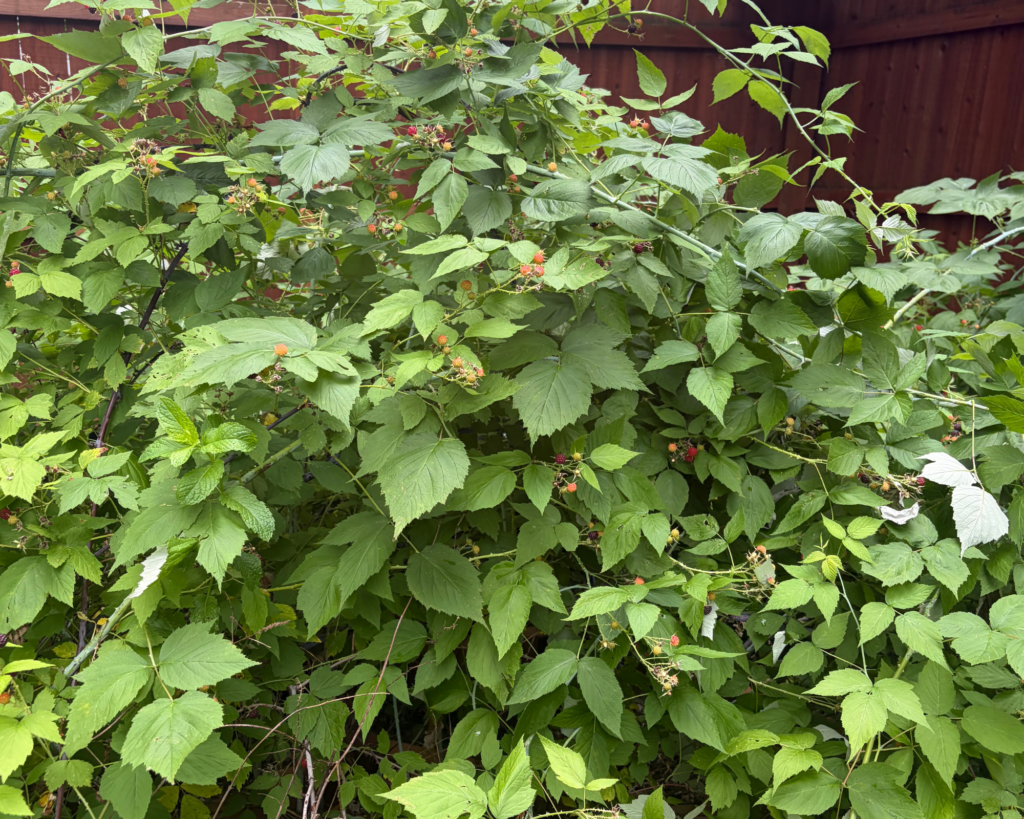
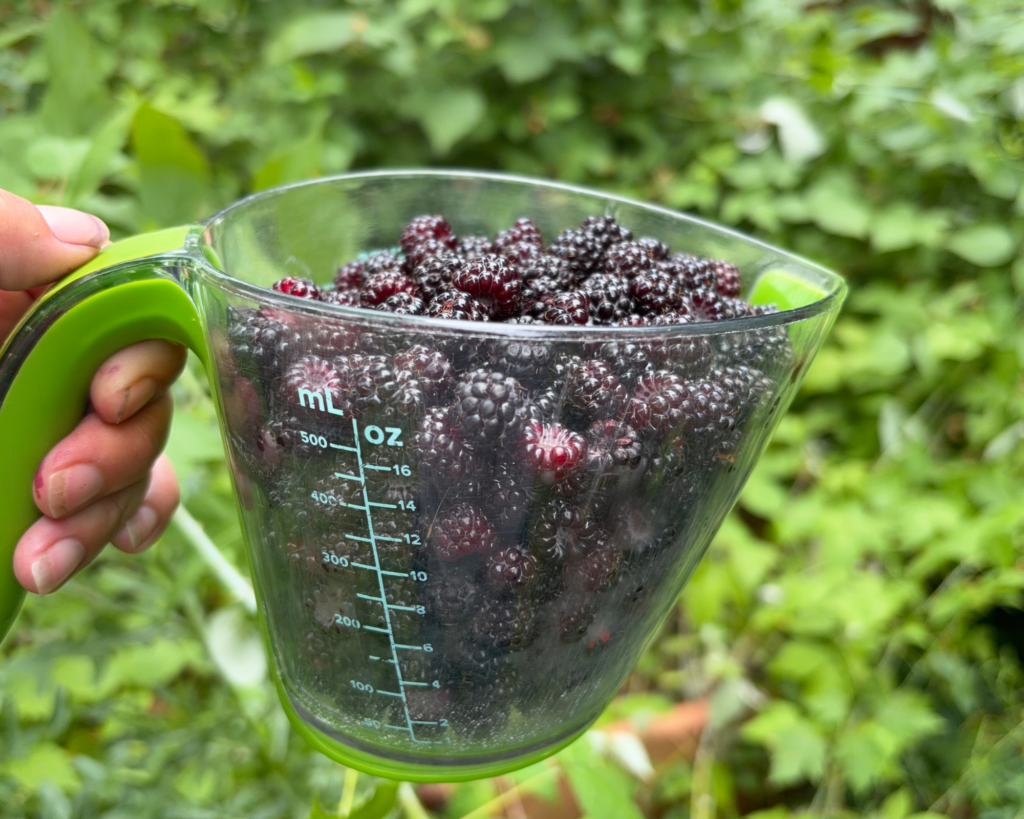
Instead of pulling it, I decided to see what would happen. Four years later, that single volunteer has turned into a productive patch that yields at least two gallons of berries every season. My patch typically produces fruit from late spring into mid-summer, and I suspect the privacy fence behind it creates a warm microclimate that helps the canes wake up earlier and keeps the harvest going longer.
That patch has also taught me something else: a lot of people confuse black raspberries with blackberries. It’s an easy mistake to make. Both are dark-colored berries that grow on thorny brambles, and from a distance they look similar. Once you know what to look for, though, they’re easy to tell apart.
Whether you’ve discovered a mystery berry patch in your yard, you’re trying to identify wild berries, or you’re deciding which fruit deserves a spot in your garden, here’s everything you need to know to tell the difference between blackberries and black raspberries.

What Are Blackcap Berries?
When people talk about blackcaps or black raspberries, they’re all referring to the same type of fruit. In eastern North America, that fruit is typically Rubus occidentalis, while western gardeners may encounter Rubus leucodermis. Both are commonly called black raspberries. The eastern variety can also be found in parts of Europe and Russia. However, the bulk of commercial black raspberry production is based in the Pacific Northwest.
Many gardeners are surprised to learn that black raspberries are actually closer relatives of red raspberries than blackberries. While all three belong to the Rubus genus, black and red raspberries share many of the same growth and fruiting characteristics.
Why Are Black Raspberries Called Blackcaps?

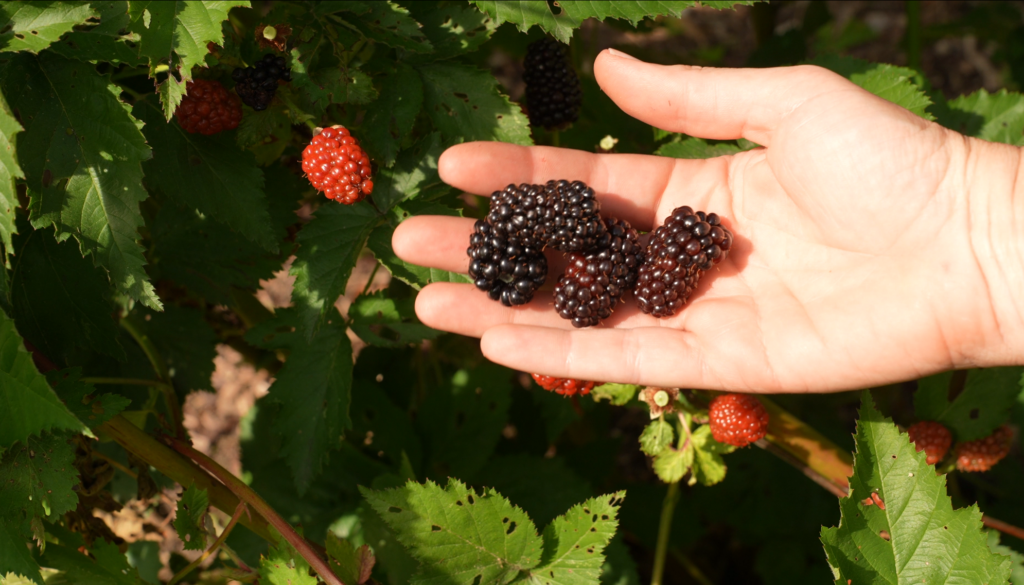
The nickname “blackcap” comes from the fruit’s shape after it’s picked. Ripe black raspberries separate from the receptacle, leaving a hollow center behind. The berry resembles a small cap or thimble, which inspired the common name.
How to Identify Black Raspberries
Although both belong to the Rubus genus, black raspberries and blackberries grow quite differently. Black raspberry plants tend to form smaller, arching patches, while blackberry plants are often more vigorous and upright.
How a Black Raspberry Bush Grows
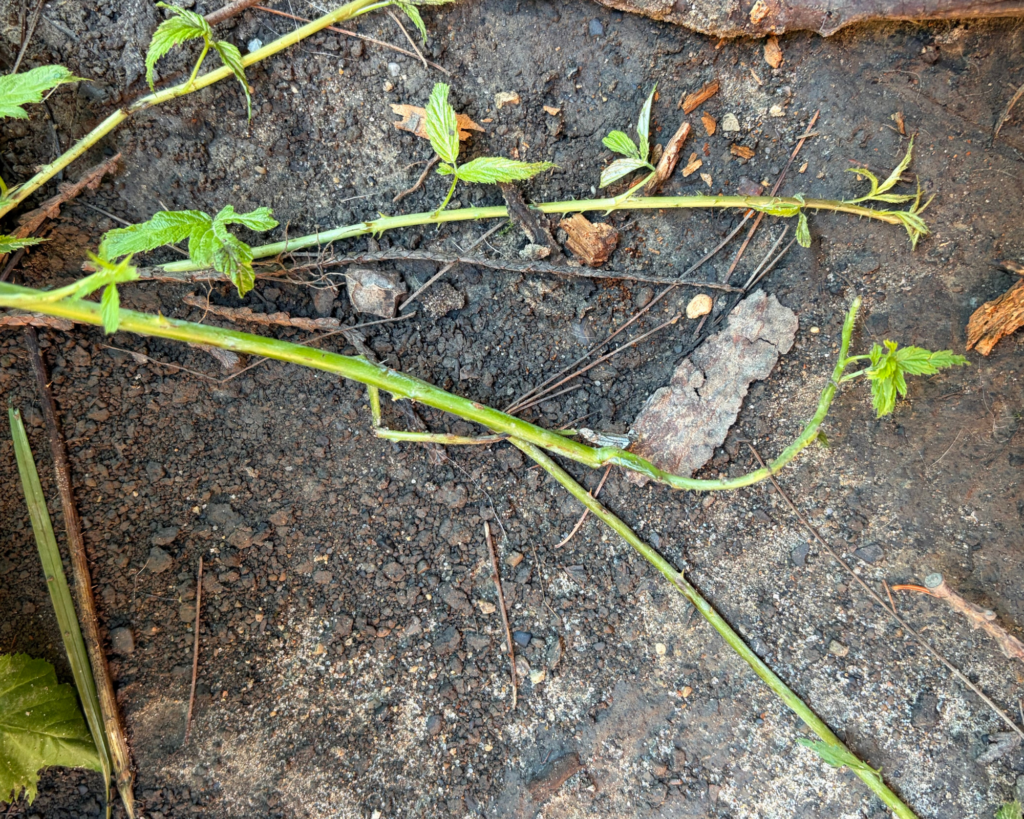
Black raspberry canes grow upright when they’re young before arching toward the ground as they mature. One of their most distinctive traits is their ability to root at the cane tips when they touch the soil, allowing a single plant to gradually expand into a productive patch over time. I’ve seen this firsthand in my own garden. What started as one volunteer cane gradually became a patch that returns with a reliable harvest every year. Young canes often have a whitish coating, and the leaves have noticeably pale, fuzzy undersides that make the plants easy to identify.
How a Blackberry Bush Grows
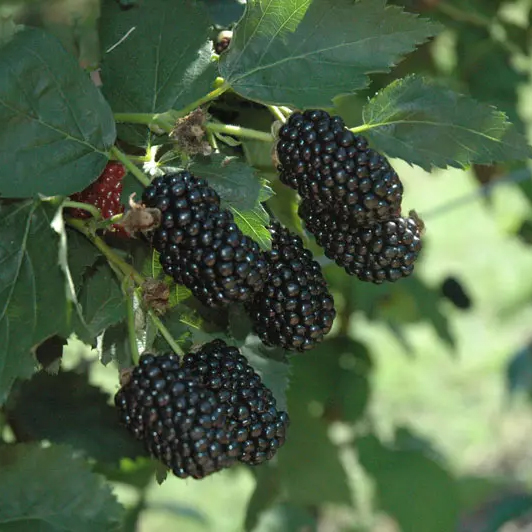
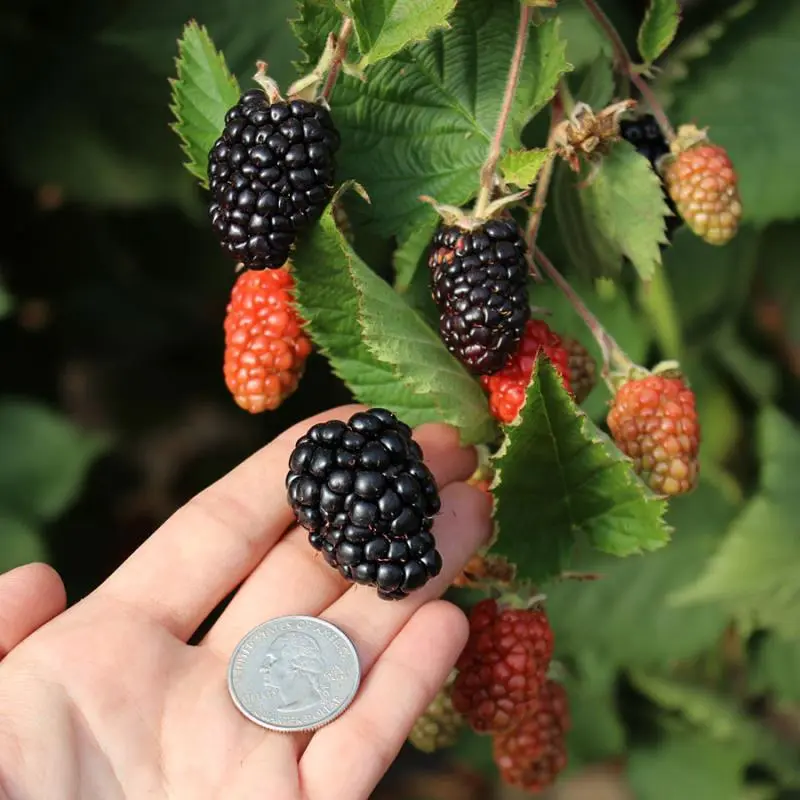
Blackberry plants vary widely depending on the cultivar. Some varieties grow upright, while others produce semi-erect or trailing canes that benefit from support. Blackberry plants generally have a more robust appearance than black raspberries, and their leaves are typically green on both sides.
Unlike black raspberries, blackberries don’t typically spread by rooting at the cane tips. Their growth tends to be more vigorous, which is one reason they’re often grown for larger harvests and bigger fruit. However, some varieties, like Baby Cakes Blackberry, can be grown in containers.
Blackberry and Black Raspberry Fruit Differences
The biggest difference most gardeners notice is fruit size. Blackberries are typically larger and juicier, while black raspberries are smaller and more compact.
Flavor is another key difference. Blackberries tend to have a balanced sweet-tart flavor, while black raspberries have a richer, more concentrated taste. That’s one reason black raspberries are so popular in jams, syrups, and desserts where berry flavor takes center stage.
The berries are also harvested differently. Black raspberries separate cleanly from the plant when ripe, while blackberries remain attached to their core. This difference affects everything from identification to food preservation.
Black Raspberry and Blackberry Trellis Needs

Both blackberries and black raspberries benefit from support and regular pruning. Keeping the canes off the ground improves airflow, reduces disease problems, and makes harvesting easier.
Blackberry plants, especially trailing and semi-erect varieties, often perform best on a two-wire or T-trellis system. You can either buy a trellis pre-made or learn how to make your own in the video above.
Pruning Black Raspberries vs. Pruning Blackberries
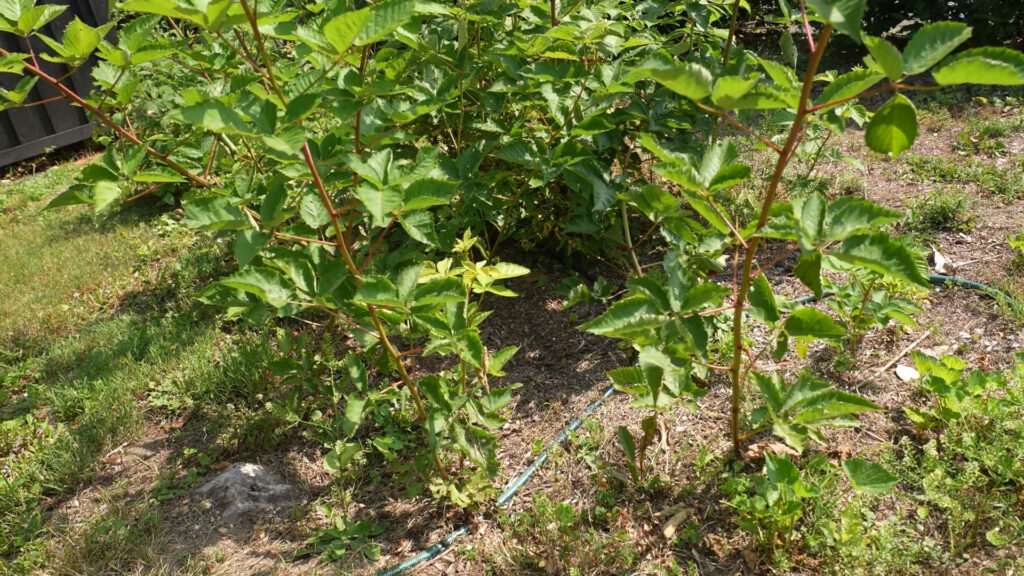
Pruning requirements differ slightly between the two berries. Black raspberries are typically cut back with a hand pruner, shears, or lopers three times a year: in the spring, during summer when new canes are tipped back, and again after harvest when spent fruiting canes are removed.
Blackberry pruning varies by cultivar. Traditional floricane-fruiting blackberries are usually pruned in late winter or early spring after any winter damage can be assessed, while primocane-fruiting blackberries can be cut to the ground after fruiting or removed before new growth begins the following spring. With both berries, regular pruning improves airflow, keeps plants manageable, and helps maintain strong fruit production year after year.
When Do Blackberries and Black Raspberries Ripen?

One of the biggest differences between blackberries and black raspberries is when they ripen and how long the harvest lasts. While local weather, growing conditions, and cultivar selection can shift the timing, black raspberries are generally one of the earliest bramble fruits to produce a harvest each year.
Black raspberries typically flower in spring and produce fruit in early summer for a couple of weeks. Blackberries usually ripen a little later and often provide a longer harvest window, typically from early summer to late summer. Depending on the variety, some blackberries may begin ripening around the same time black raspberries are finishing, helping extend the berry season in the garden.
The time it takes berries to ripen varies considerably based on climate, sunlight, rainfall, and cultivar, so there isn’t a single number of days that applies to all blackberries or black raspberries. Rather than counting days, most gardeners track seasonal cues such as flowering time, fruit color changes, and softening berries to determine when harvest is approaching. You can use our Garden Planting & Harvest Spreadsheet to help track your harvests.
Best Uses for Blackberries and Black Raspberries
While blackberries and black raspberries share many similarities, each berry has strengths that make it better suited for certain uses. Whether you’re snacking fresh, making jam, filling the freezer, or baking desserts, one may fit your needs better than the other.
Best Berry for Fresh Eating
Both berries are delicious straight from the garden, but they offer different eating experiences. Blackberries are larger, juicier, and easy to snack on by the handful. Black raspberries are smaller but pack an intense flavor that many berry lovers prefer. Their rich, concentrated taste is one of the reasons they’re so highly prized among gardeners and foragers.
Fresh-picked berries don’t last long, regardless of which type you grow. Black raspberries are especially delicate because of their hollow structure and tend to soften quickly after harvest. Blackberries usually hold up a little better, but both fruits are best eaten, refrigerated, frozen, or preserved within a few days of picking.
Best Berry for Jam and Jelly
Both berries make excellent preserves. Black raspberry jam is especially valued for its bold, concentrated flavor. Blackberry jam offers a classic sweet-tart taste that works well in everything from breakfast toast to thumbprint cookies.
Best Berry for Baking and Desserts
Blackberries shine in pies, cobblers, crisps, and galettes because their larger berries hold their shape relatively well. Black raspberries tend to blend into recipes more completely, creating deeply flavored sauces, fillings, syrups, and dessert toppings. They’re especially good in cheesecakes, quick breads, and homemade ice cream.
Best Berry for Freezing
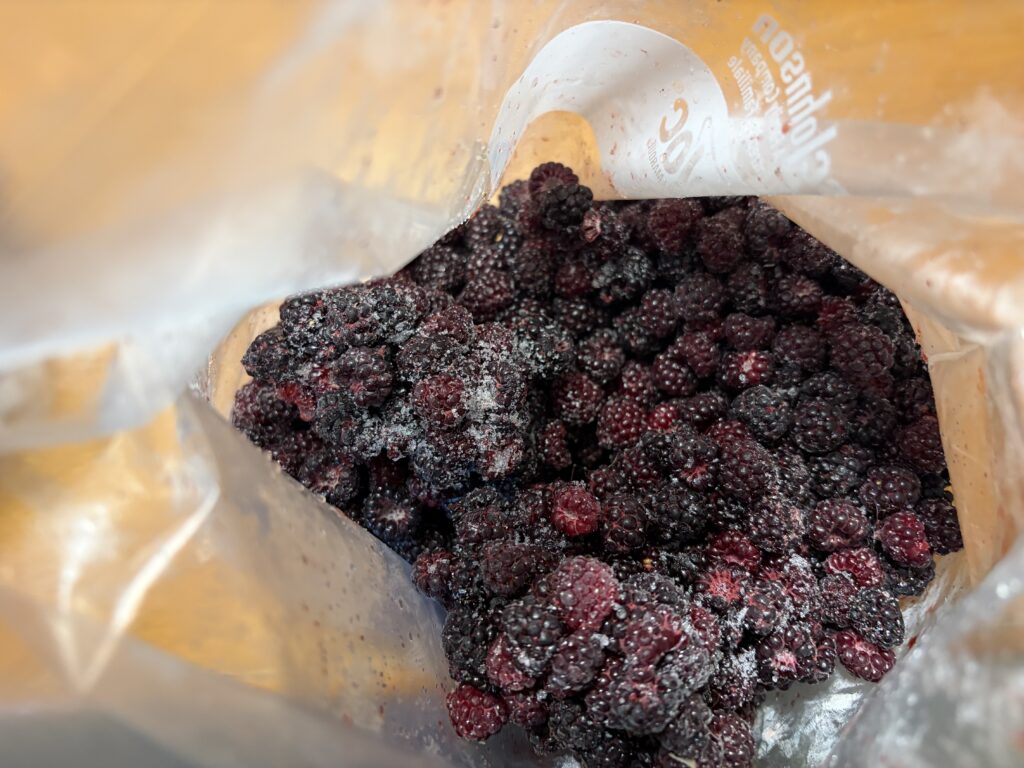
Both berries freeze exceptionally well. When I have more berries than I can eat fresh, I spread them on a baking sheet and freeze them individually before transferring them to a freezer bag or containers. This keeps them from clumping together and makes it easy to grab just what I need for smoothies, baking, or homemade preserves later in the year.
Blackberries vs. Black Raspberries: Which Berry Is Right for You?
Blackberries and black raspberries are both excellent additions to a berry garden, but they offer different strengths. Blackberries are often the better choice if you want larger berries, heavier harvests, and more cultivar options.
Black raspberries, on the other hand, are prized for their rich flavor and are still relatively uncommon in many home gardens. However, with the right care and growing conditions, these plants can be surprisingly productive when they’re happy.
If you have the room, consider growing both. You’ll enjoy the large, juicy fruit of blackberries alongside the intensely flavored berries of black raspberries, giving you the best of both worlds throughout the growing season.
Sources
- Rubus occidentalis, Plants of the World Online
- Raspberries for the Home Fruit Planting, The Ohio State University College of Food, Agricultural, and Environmental Sciences
- Pruning Erect Blackberries in the Home Garden, Ohio State University Extension
- Black Raspberry, Missouri Department of Conservation
- Solution Sought for Black Raspberry Decline, AgResearch Magazine, United States Department of Agriculture, January 2008

Leave a Reply