
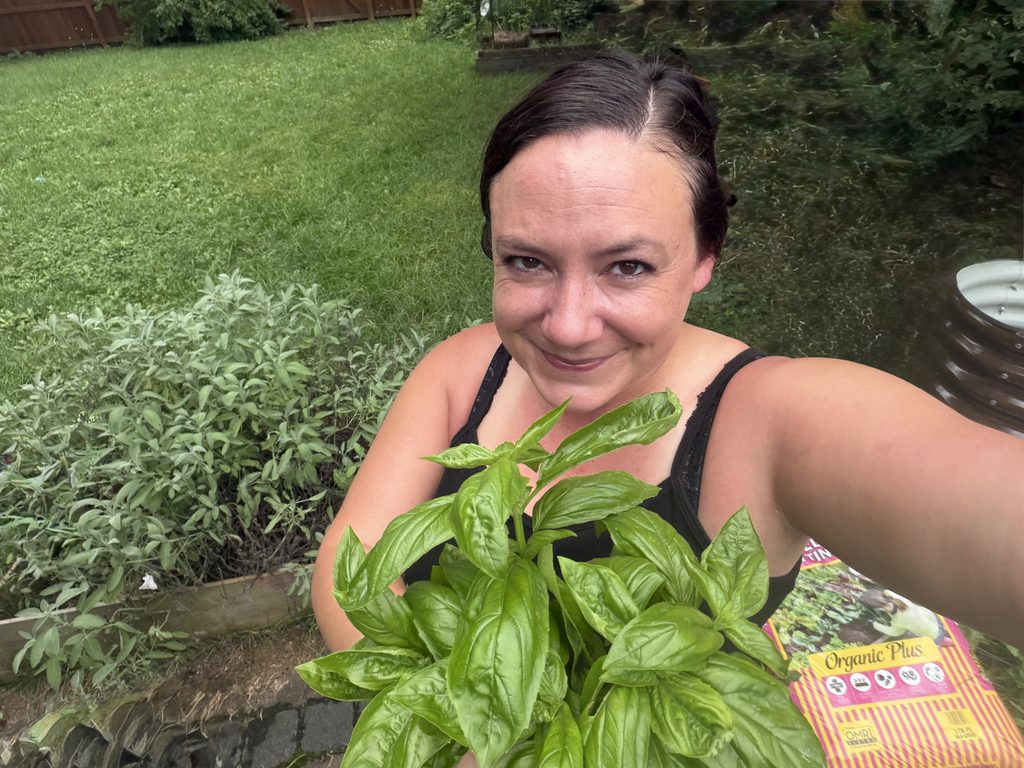
When the weather warms up, there’s one crop I look forward to harvesting more than any other: basil. Every summer, I make batch after batch of homemade pesto, so I always dedicate plenty of space to basil in my garden. This year, I planted four Genovese basil plants in my raised beds because it’s my favorite variety for pesto.
Basil earns its garden space for more than just flavor, though. I like planting it near my tomatoes because it’s an excellent companion plant. Its strong fragrance may help confuse certain insect pests looking for tomato plants, and it fits perfectly beneath larger tomato plants without competing for space.
When I first started growing basil, I made the same mistake many beginner gardeners make. Every time I wanted a few leaves for dinner, I grabbed the largest leaves from the outside of the plant. By midsummer, my basil was tall, spindly, and covered in flowers. Instead of producing more leaves, it seemed determined to set seed and call it a season.
The biggest lesson I’ve learned is that harvesting isn’t the end of basil’s growing cycle. It’s actually what keeps the plant producing. Instead of simply picking leaves, I started harvesting entire stem tips at the right location. Almost immediately, my plants became fuller, bushier, and far more productive. Now, a handful of basil plants provides enough leaves for fresh recipes all summer, plenty of pesto for the freezer, and even seed for the following year’s garden.
In this guide, I’ll show you when to harvest basil, how to pick fresh basil leaves so it keeps growing, how to gather basil for pesto, how to collect basil seeds, and my favorite ways to preserve basil so none of the harvest goes to waste.
When to Harvest Fresh Basil Leaves
One of the biggest surprises for new gardeners is how quickly basil is ready to harvest. You don’t need to wait until plants are large and mature.
I typically begin harvesting once plants are 6–8 inches (15–20cm) tall and have developed several sets of leaves. Starting early actually helps the plant branch and become bushier throughout the season.
For the best flavor and longest storage life, I try to harvest basil:
- In the morning after the dew has dried (this is when the essential oils are the strongest)
- Before the hottest part of the day
- From healthy, vigorous stems
- Regularly throughout the growing season
For years, I treated basil like a crop that needed to reach full size before harvesting. Now I do exactly the opposite. I pick a little every week, and the plants reward me by growing even more vigorously.
Can You Harvest Flowering Basil
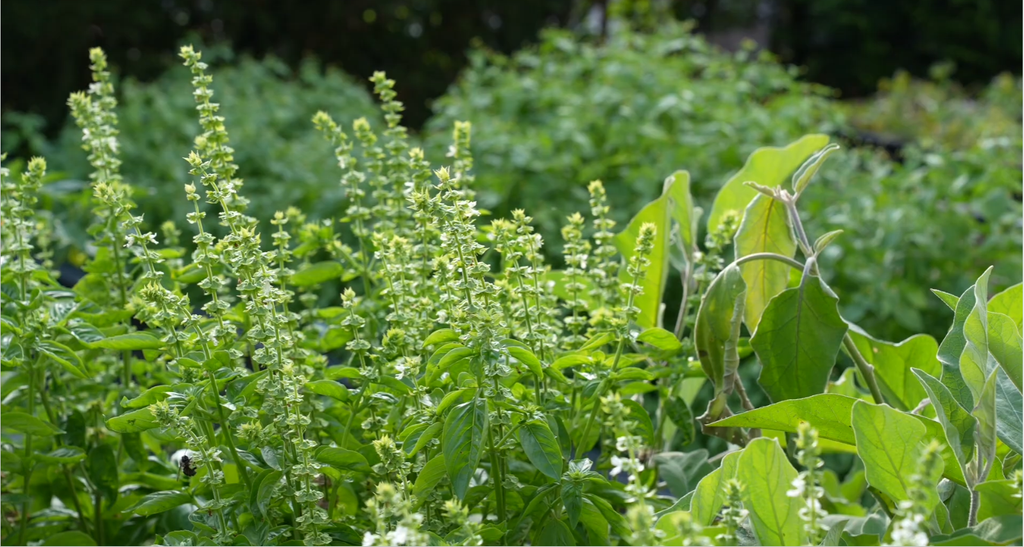
Yes, you can harvest flowering basil, but you’ll usually get the best flavor if you prevent flowering whenever possible. Once basil begins flowering, a process known as bolting, the plant shifts much of its energy toward seed production instead of producing tender leaves. The leaves often become smaller and can take on a slightly stronger flavor.
I make a habit of checking my basil plants every few days during summer. Flower spikes can seem to appear overnight, especially during hot weather. If I catch them early and pinch them out, the plants usually return to producing new leaves without missing a beat.
Tools for Pruning Basil

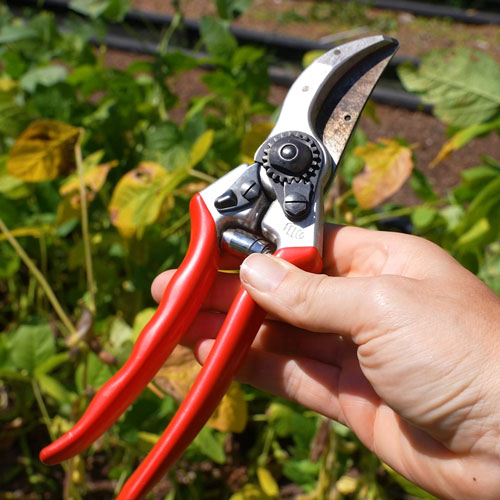

You don’t necessarily need tools to prune basil. Basil is soft enough that you can pick it with your fingers, but I almost always use snips, scissors, or pruners. I find the cuts are cleaner, harvesting is faster, and I’m less likely to accidentally damage nearby stems. A clean, sharp cutting tool makes it easy to place cuts exactly where you want them and helps prevent unnecessary stress on the plant.
How to Pick Fresh Basil So It Keeps Growing
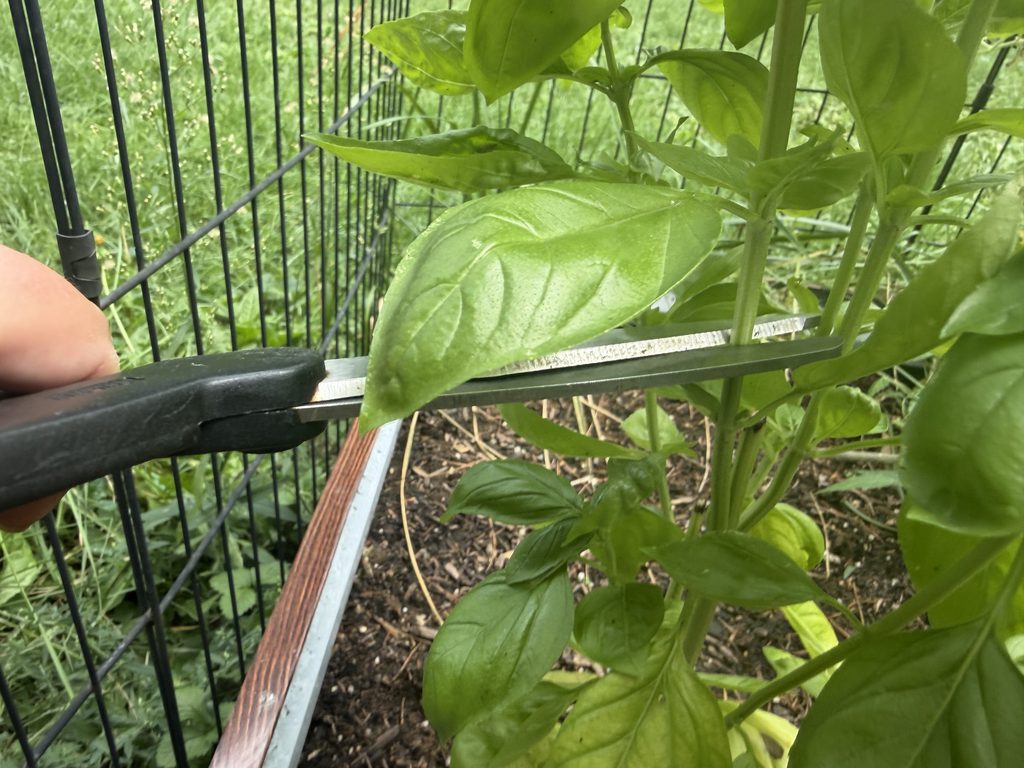
The key to picking fresh basil leaves so the plant keeps growing is understanding where to make the cuts. Instead of picking individual leaves, I harvest stem tips whenever possible because it encourages the plant to branch and produce even more growth.
When I’m harvesting, I look for a leaf node, which is the spot where two leaves emerge directly across from each other on the stem. Using herb snips, scissors, shears, or pruners, I make a cut about ¼ inch (6mm) above that node. Within a week or two, the plant responds by sending out two new shoots from the spot where I made the cut. Instead of replacing one stem with another, the plant effectively doubles that branch.
How to Gather Basil for Pesto

To gather basil for pesto, I need a lot more basil than I do for everyday cooking. Rather than stripping leaves from a single stem, I select larger stem sections from throughout the plant. This gives me plenty of leaves while keeping the plant balanced.
I try not to prune back more than ⅓ of the plant at a time. After years of growing basil, I’ve found that plants recover quickly from moderate harvests but may struggle if they’re cut back too aggressively.
Genovese basil remains my top choice for pesto because of its large leaves and classic flavor. However, I have also grown sweet basil, lemon basil, and deep purple basil in the past. Each has a different flavor profile. I find sweet basil and Genovese are the best for that classic Italian taste, while lemon basil is great for adding a little citrus kick to dishes and purple basil adds a more licorice flavor. If you are growing multiple varieties, it helps to use plant tags to tell them apart.
How to Collect Basil Seeds

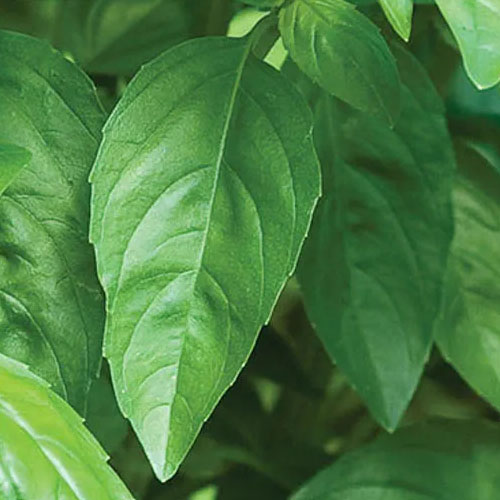

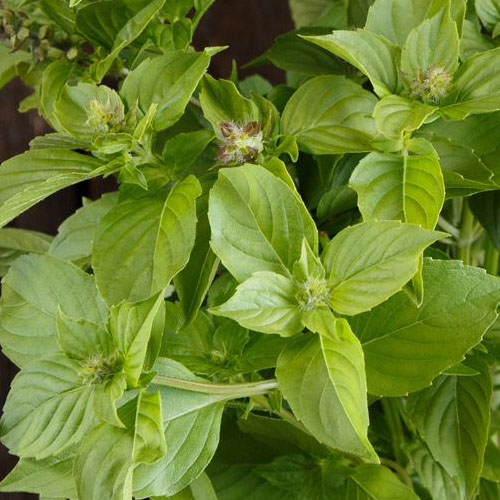

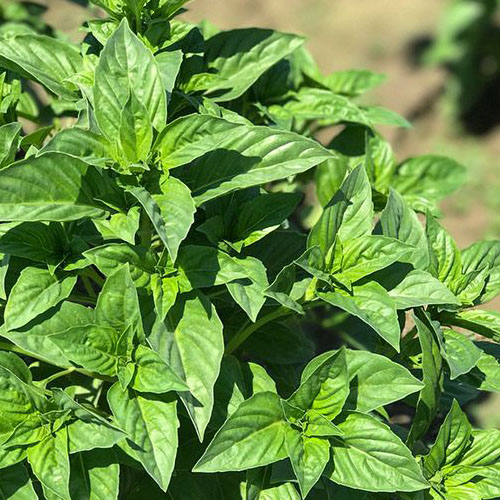
To collect basil seeds, I usually designate one or two plants to let flower and bolt by late summer. Over several weeks, the flower spikes dry and turn brown.
Once the seed heads feel papery:
- Cut the flower stalks
- Place them in a paper bag or shallow tray
- Rub the seed heads between your fingers
- Separate the tiny black seeds from the dried plant material
I store saved seeds in paper envelopes labeled with the variety name and harvest date. After accidentally mixing up several basil varieties one year, I started tracking seed harvests, planting dates, and garden notes. Our Garden Planting & Harvest Spreadsheet makes it much easier to remember which varieties performed best from season to season.
How to Preserve Basil
Basil grows so quickly during summer that it’s easy to end up with more than you can use fresh. Over the years, I’ve tried nearly every preservation method available. While each has its place, some methods preserve flavor much better than others. The techniques I use most often are refrigeration, freezing leaves, freezing pesto, and drying leaves for seasoning.
How to Store Fresh Basil
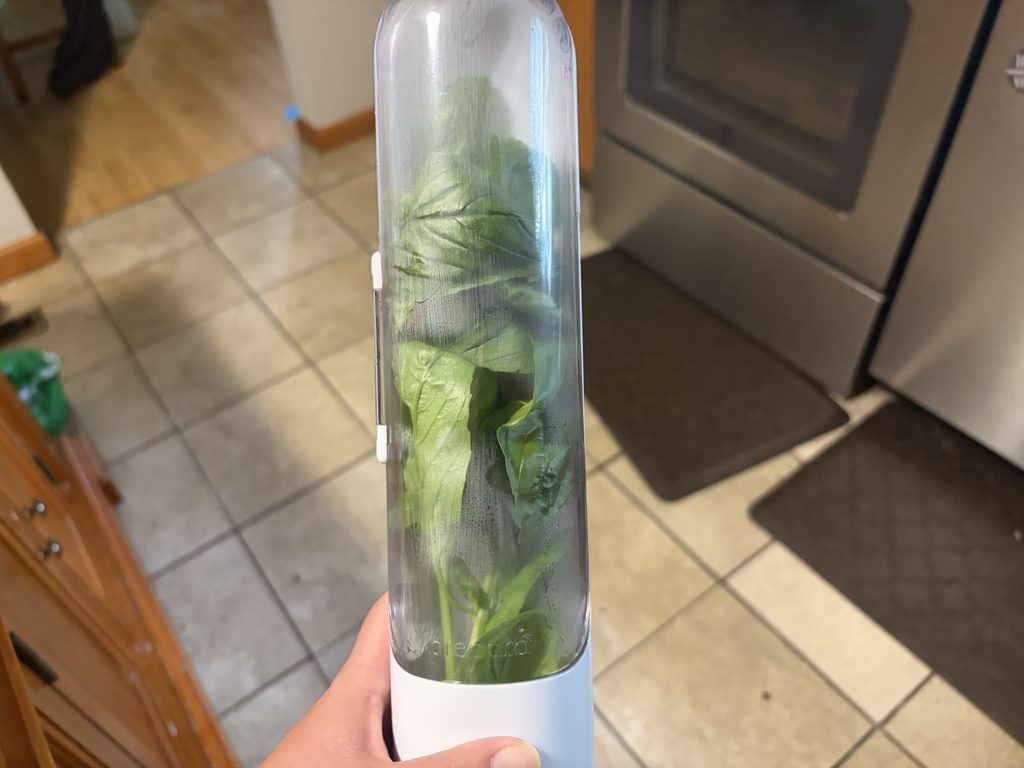
Fresh basil is surprisingly delicate. I’ve had the best success using herb keepers that hold stems upright in water, much like a vase of fresh flowers. Before I bought a Prepara Herb Savor that fits perfectly in my kitchen door, I simply used mason jars with an inch or two of water in the bottom. I’ve also stored leaves in a slightly damp paper towel placed inside a partially open storage bag in the refrigerator. This method works well when I’ve already removed the leaves from the stems. Under good conditions, fresh basil generally stays usable for 3–5 days.
How to Freeze Basil
There are a couple of different ways to freeze basil. It can be as simple as taking the leaves, making sure they’re completely dry, and putting them into a freezer bag with the date on it. I’ve also pureed the fresh leaves, put the pieces in an ice cube tray, and covered them with water. Pro-tip: If you want pesto on hand year-round, you can also freeze pesto as you make it!
How to Dry and Store Basil
To dry and store basil, there are some things I make sure I do to keep the flavor intact. When I first started gardening, I dried basil the traditional way by tying small bundles together and hanging them in my garage. It worked, but it took weeks and the results were inconsistent depending on humidity. Today, I use a food dehydrator instead. I spread the leaves in a single layer and dry them at 95°F–105°F (32°C–40°C) until they’re completely crisp. Once dry, I crumble the leaves and store them in airtight glass jars away from heat and direct sunlight. The flavor isn’t quite as vibrant as fresh or frozen basil, but dried basil remains useful for soups, sauces, and seasoning blends throughout the year.
Final Thoughts

Basil is one of the most rewarding herbs I’ve ever grown. Whether you’re filling raised beds, container gardens, or a sunny kitchen patio with basil plants, learning how to pick basil correctly will dramatically increase your yields.
By harvesting regularly, removing flower buds, and cutting stems above leaf nodes, you can enjoy months of abundant growth from just a handful of plants. For me, that means plenty of fresh basil for summer meals, enough pesto for the freezer, and seeds for next year’s garden.
If you’d like more practical gardening guides, seed-starting tips, and harvest advice delivered straight to your inbox, be sure to subscribe to the ReSprout newsletter.
Sources
- How to Grow Basil in Your Garden, Utah State University Extension
- Herbs Make Good Plant Partners and Companions, Penn State University Extension
- Let’s Preserve: Drying Herbs, Purdue Extension

Leave a Reply